On Salzburg · scale
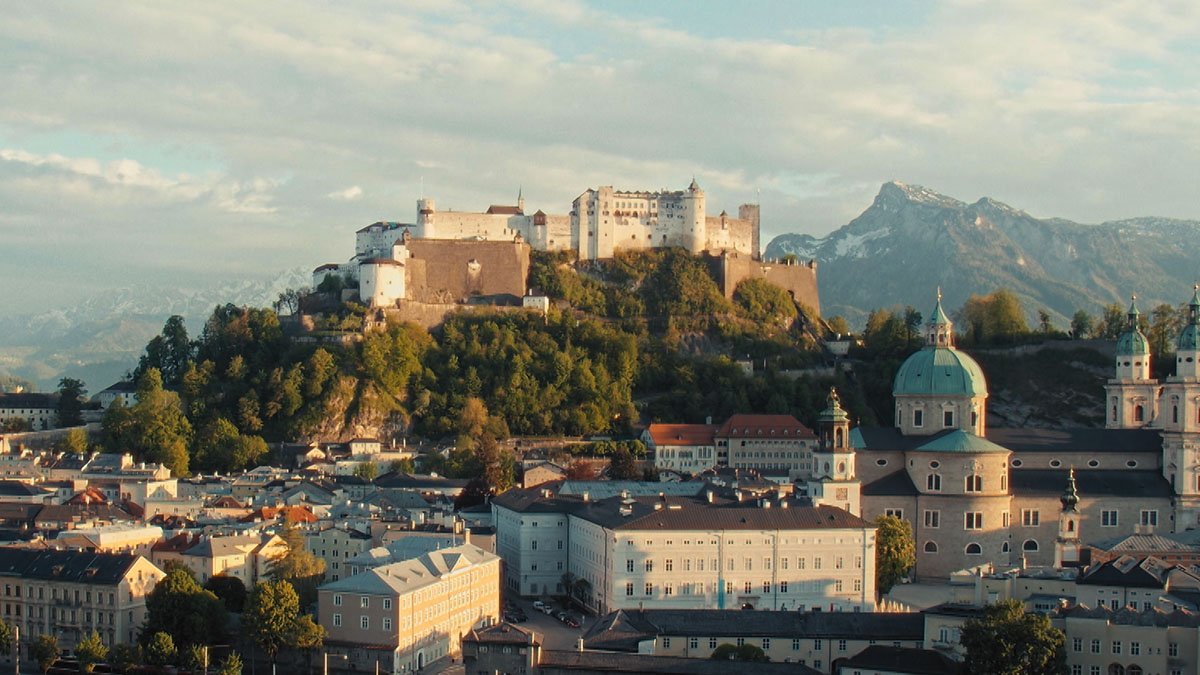
Salzburg: a small city with a global signal
People sometimes ask why I continue to work from Salzburg rather than London, Los Angeles, or New York.
I know those places. I studied and worked in the United States, spent a great deal of time in the international media centers—and I particularly loved my time in Manhattan.
But international relevance no longer depends on where your office is located.
It depends on the strength of the idea, the quality of the work, the partners you can bring together, and your ability to connect the project with an international audience.
Salzburg has always understood the power of culture beyond its own size. It gave the world Mozart, became the cinematic home of The Sound of Music, and is part of the region from which Silent Night traveled across languages, cultures, and generations.
These are not simply historical achievements or tourism brands. They are enduring pieces of cultural intellectual property that continue to create emotional and economic value around the world.
Scale was never the point.
Signal was.
In 2005, I initiated the Salzburg Media Summit because I believed Salzburg needed to be an active part of the international media conversation.
We began with approximately twenty-five people.
Today, more than two hundred decision-makers from broadcasting, streaming, production, finance, technology, government, and the creative industries meet each year at Schloss Leopoldskron.
The subjects have changed over time—from digital production and streaming to financing, production incentives, artificial intelligence, intellectual property, and the future of European media.
The principle has remained the same:
A smaller place can have international influence when it understands its strengths and brings the right people, ideas, and institutions together.
Salzburg offers cultural credibility, outstanding creative talent, international recognition, and a quality of personal exchange that has become increasingly rare.
The objective is not to imitate London, Los Angeles, or New York.
It is to understand what Salzburg can contribute that those places cannot.
For me, Salzburg is not a limitation.
It is a strong base, an international meeting point, and a particular way of looking at culture, technology, and media.
In a digital, multichannel world, ideas, talent, financing, production, and audiences no longer need to exist in the same place.
What matters is the quality of the idea—and the ability to carry it into the world.